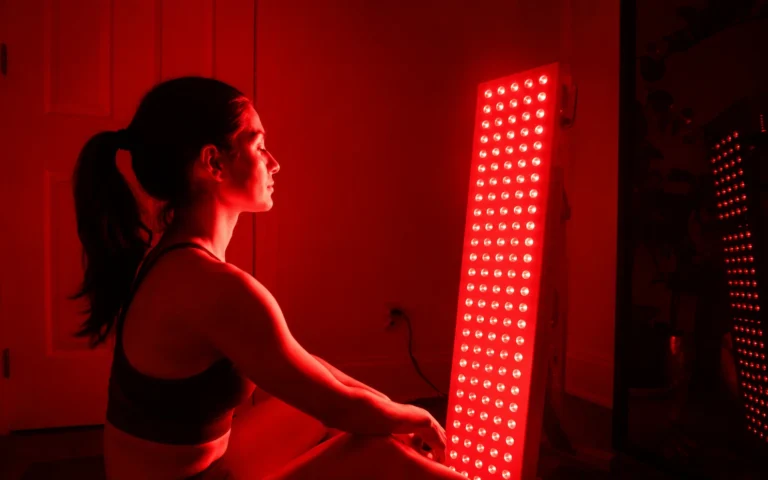
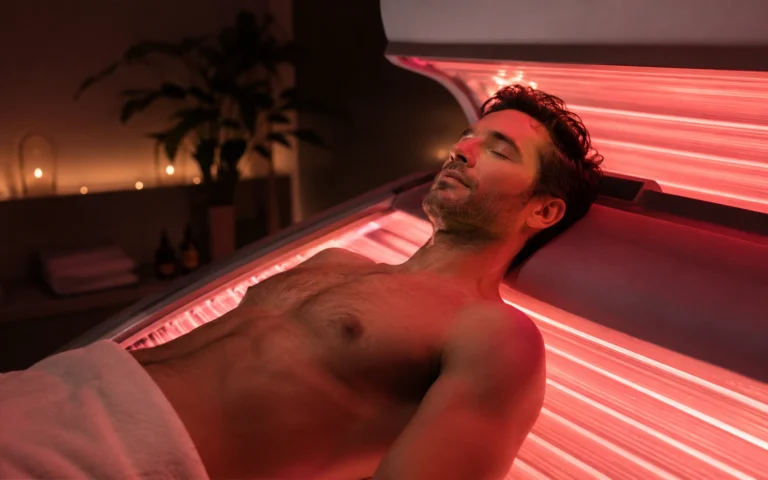
Innovative regeneration devices for professional and home use alike.


Red and near infrared light: what is the difference, and why are both in one panel?
Two wavelength ranges dominate the range of light therapy devices: red and near infrared. At first sight it is the same technology, but in practice they work at different depths - and that difference is what decides which panel is worth choosing.
In this article we go through what the two ranges cover, why they are combined in today's devices and what to look out for on the technical data sheet. If you are curious about the procedure itself, take a look at the red light therapy page as well.
The difference lies in the wavelength - and in how deep a given wavelength reaches into the tissues. This is largely what determines the value of a panel.
Red or near infrared - what is the difference?
Red light (620-700 nm)
- It is absorbed in the layers closer to the surface of the skin.
- It may support collagen and elastin production, which may result in a firmer appearance of the skin.
- It may contribute to a calmer condition of the skin.
- It may support regeneration and the fading of scars.
- It targets the energy production of the cells and the functioning of the mitochondria.
Near infrared light (700-1200 nm)
- It reaches deeper: it also reaches the muscles and the joints.
- It may support local circulation and with it regeneration.
- It may ease discomfort in the muscles and joints after exertion.
- It can be part of the cool-down routine after sporting exertion.
Why are both in one panel?
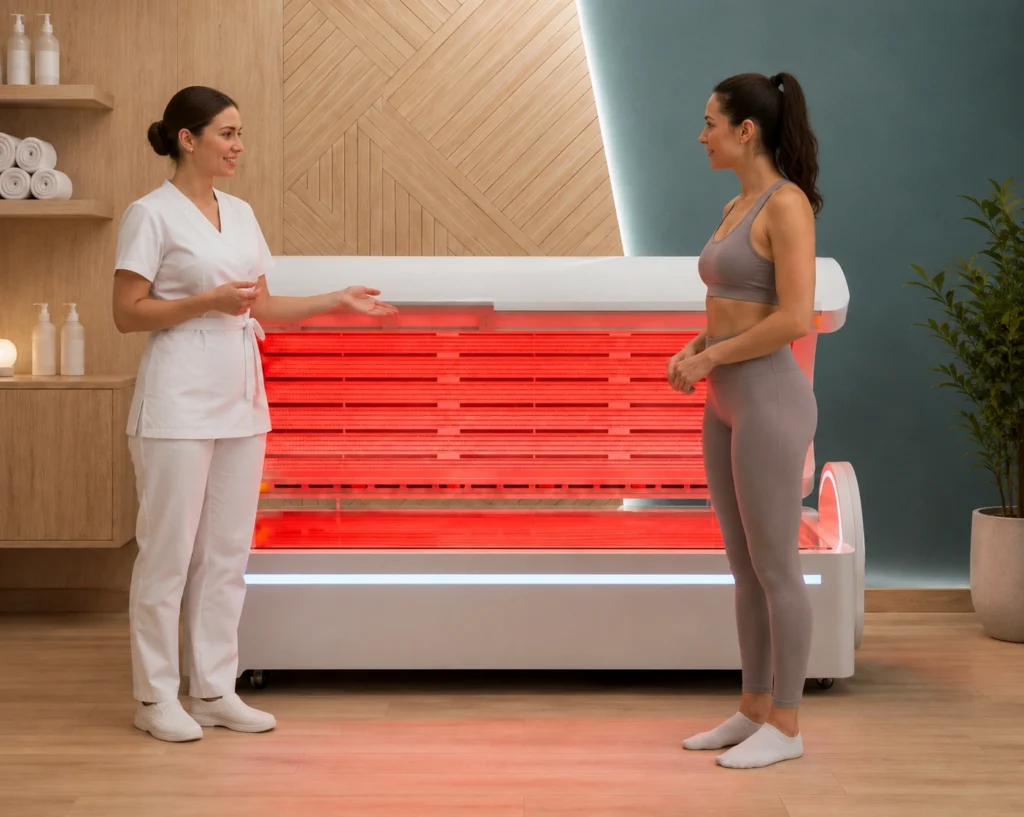
Precisely because the two ranges work at different depths. That is why panels today do not choose between them: with dual-chip LEDs they emit at red and near infrared wavelengths at the same time. In practice this means that with a single device you can:
- You can do both the cool-down after exertion and your skin care, without a separate machine.
- You can work in a targeted way and over a larger surface, with the same panel.
- You can adjust the brightness wavelength by wavelength, if the device supports it.
- You can shape the routine flexibly according to what you need at the time.
It combines well with other regeneration methods
Many people build light therapy into their regeneration routine together with cryotherapy or with oxygen therapy build them into their recovery routine together - each supports the functioning of the body in a different way.
What to look out for on the technical data sheet
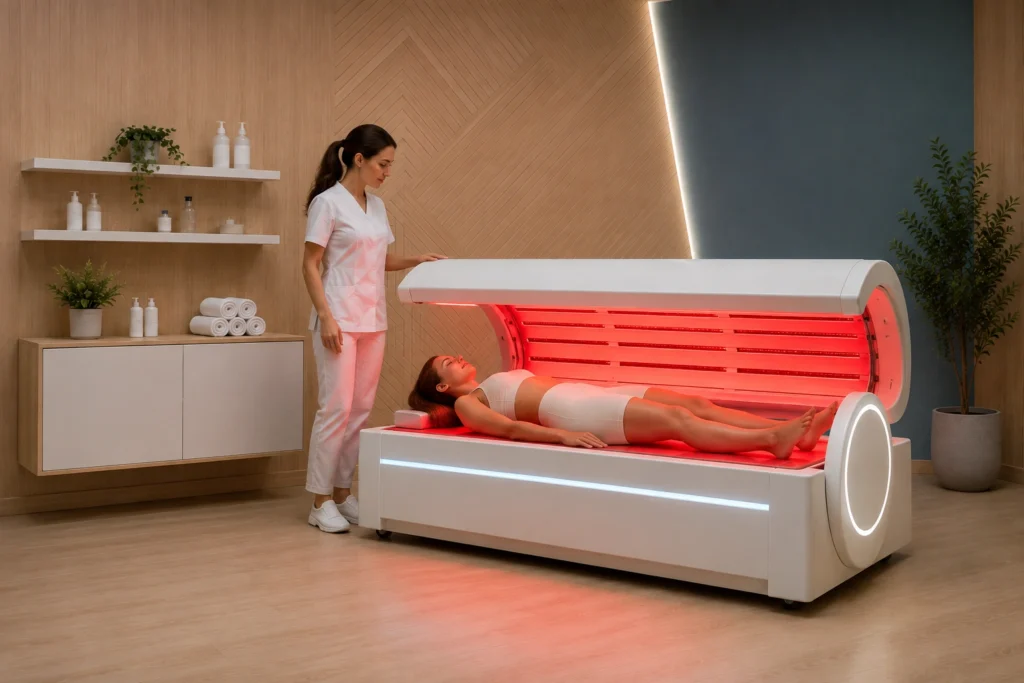
Four pieces of data decide: which wavelengths the panel emits, how strong its irradiance is at a given distance, whether the brightness of each range can be set separately, and how large a surface it illuminates. Distance matters a great deal: irradiance falls off quickly, which is why manufacturers typically specify a distance of 15-30 cm.
Red and near infrared light can also be used separately, but in today's devices they appear together - and that is exactly what gives them their flexibility. When choosing, it is not the marketing copy but the list of wavelengths and the irradiance data that count.
Take a look at the panels
From desktop panels to the full-body version - compare the wavelengths and the power.